COONAMBLE
Coonamble, a rural NSW town 520km from Sydney, embodies the spirit of Australian outback communities.
The Problem:
Coonamble, like many regional towns, faces population and economy challenges induced by dwindling residents and decreases in residential influx of young growing families.
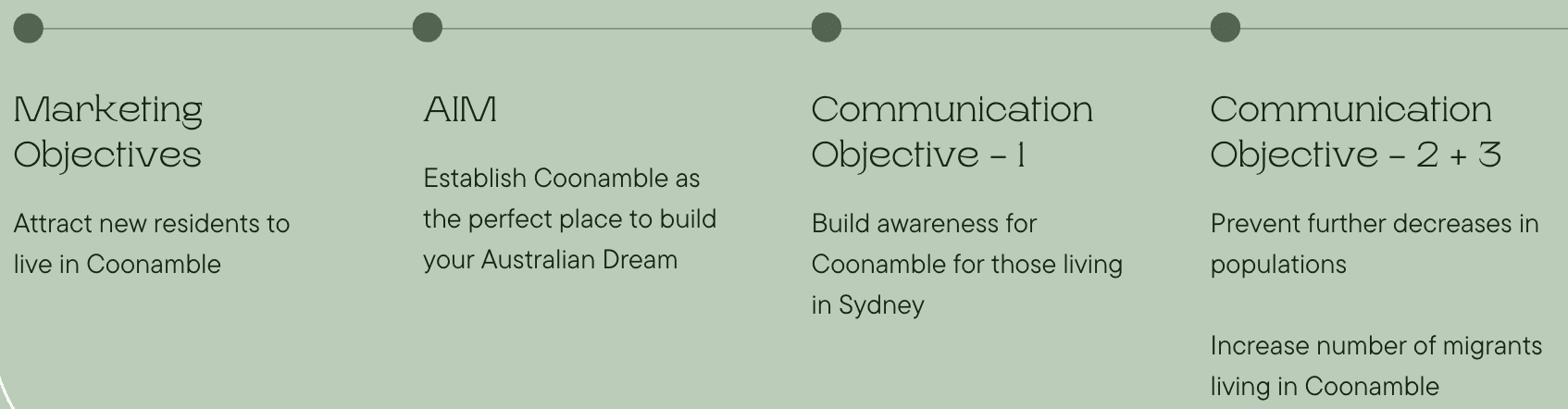
Campaign Objectives:
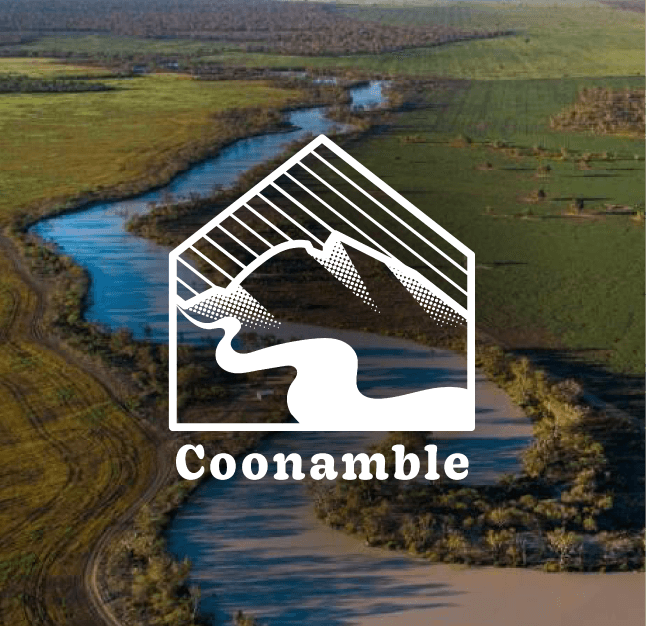
To increase audience appeal, Coonamble first needed updated branding elements. I developed a well structured logo in the shape of a home portraying the local Bullaway Mountain and the Castlereagh River, both iconic landmarks of the picturesque Coonamble.
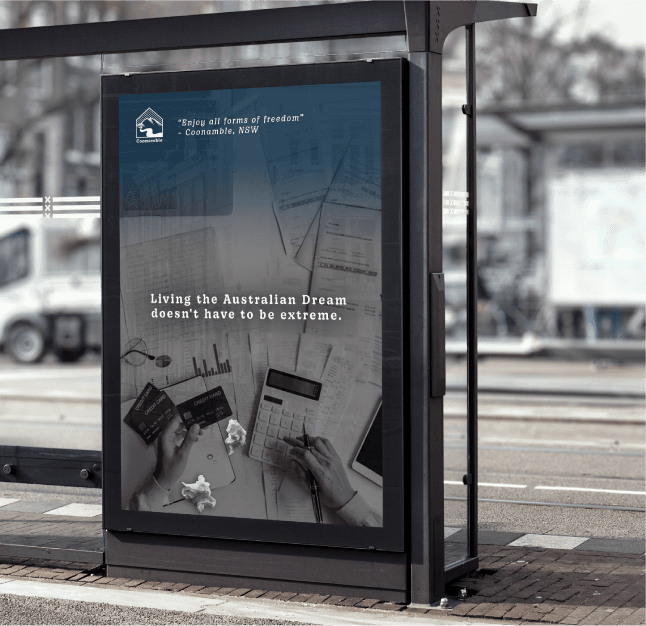
To reach the young audience currently living in urban areas in including Sydney & Brisbane. This digital advertisement is placed in city bus stops grabbing the audiences attention as they commute to work. The ad portrays a person calculating a number of household bills, in black and white. This choice of black and white adds negative emotion to the composition, additionally symbolised by the used tissues. The headline reads: "Living the Australian dream doesn't have to be extreme", implying that Coonamble is a more financially simplistic place to live. The tagline "Enjoy all forms of freedom" is displayed beside the logo to encourage the audience to set themselves free of financial burden and physical restraint in the city.
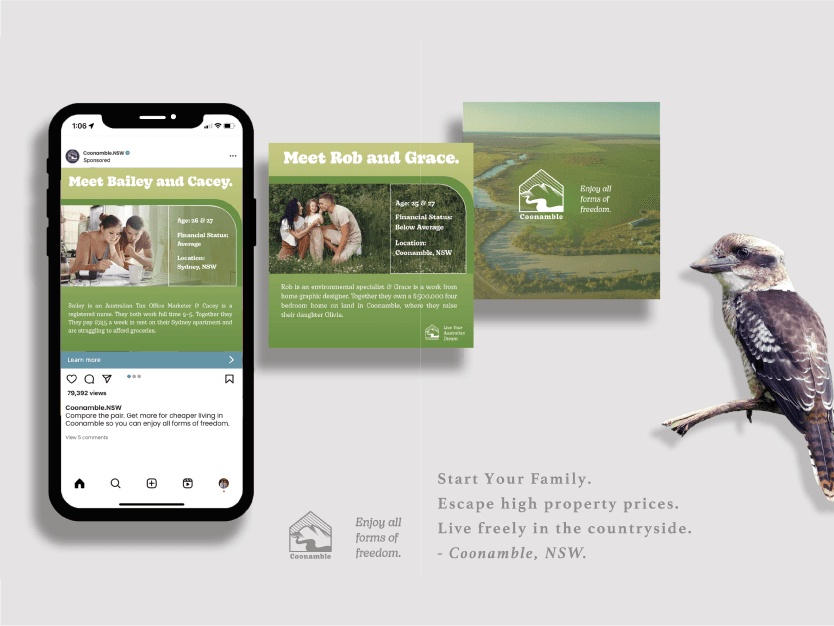
Additionally, social media ads were developed for Coonamble, including static posts, sponsored posts, and Instagram story polls.
A static post concept (Shown in the first image) is a couple comparison. One couple lives in a shoe box apartment in Sydney and the other live in the rural Coonamble. The couple living in Coonamble work in hybrid arrangements, own land and a bigger house for the same price, and were able to financially support the expansion of their family. Whereas the other couple work 9-5 in offices, were struggling to afford their rent and couldn’t have a child in their financial position.
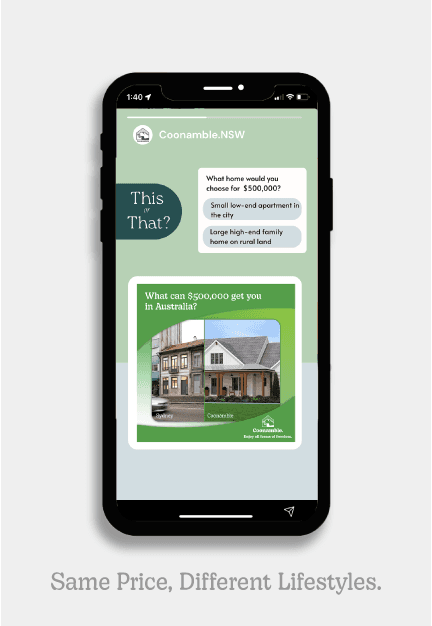
The image below displays the interactive story poll, which asks the audience what they would prefer for $500,000, a small low-end apartment in the city or a large family home on rural land?
COONAMBLE
Coonamble, a rural NSW town 520km from Sydney, embodies the spirit of Australian outback communities.
The Problem:
Coonamble, like many regional towns, faces population and economy challenges induced by dwindling residents and decreases in residential influx of young growing families.
Campaign Objectives:
To increase audience appeal, Coonamble first needed updated branding elements. I developed a well structured logo in the shape of a home portraying the local Bullaway Mountain and the Castlereagh River, both iconic landmarks of the picturesque Coonamble.
To reach the young audience currently living in urban areas in including Sydney & Brisbane. This digital advertisement is placed in city bus stops grabbing the audiences attention as they commute to work. The ad portrays a person calculating a number of household bills, in black and white. This choice of black and white adds negative emotion to the composition, additionally symbolised by the used tissues. The headline reads: "Living the Australian dream doesn't have to be extreme", implying that Coonamble is a more financially simplistic place to live. The tagline "Enjoy all forms of freedom" is displayed beside the logo to encourage the audience to set themselves free of financial burden and physical restraint in the city.
Additionally, social media ads were developed for Coonamble, including static posts, sponsored posts, and Instagram story polls.
A static post concept (Shown in the first image) is a couple comparison. One couple lives in a shoe box apartment in Sydney and the other live in the rural Coonamble. The couple living in Coonamble work in hybrid arrangements, own land and a bigger house for the same price, and were able to financially support the expansion of their family. Whereas the other couple work 9-5 in offices, were struggling to afford their rent and couldn’t have a child in their financial position.
The image on the right displays the interactive story poll, which asks the audience what they would prefer for $500,000, a small low-end apartment in the city or a large family home on rural land?
The big idea statement for Coonamble is to redefine the Australian dream and reignite interest in Coonamble among young families and millennials craving a work-life balance, lifestyle and Build your Australian dream from the ground up.
By offering financial freedom, and for migrants pursuing Australian residency. By showcasing Coonamble as a beacon of freedom and opportunity, we aim to reverse its population decline and spark economic and social renewal by attracting young families to foster a vibrant, growing community, prioritising people's well-being and putting them first.
The big idea statement for Coonamble is to redefine the Australian dream and reignite interest in Coonamble among young families and millennials craving a work-life balance, lifestyle and Build your Australian dream from the ground up.
By offering financial freedom, and for migrants pursuing Australian residency. By showcasing Coonamble as a beacon of freedom and opportunity, we aim to reverse its population decline and spark economic and social renewal by attracting young families to foster a vibrant, growing community, prioritising people's well-being and putting them first.
Get to know me better…




Get to know me better…